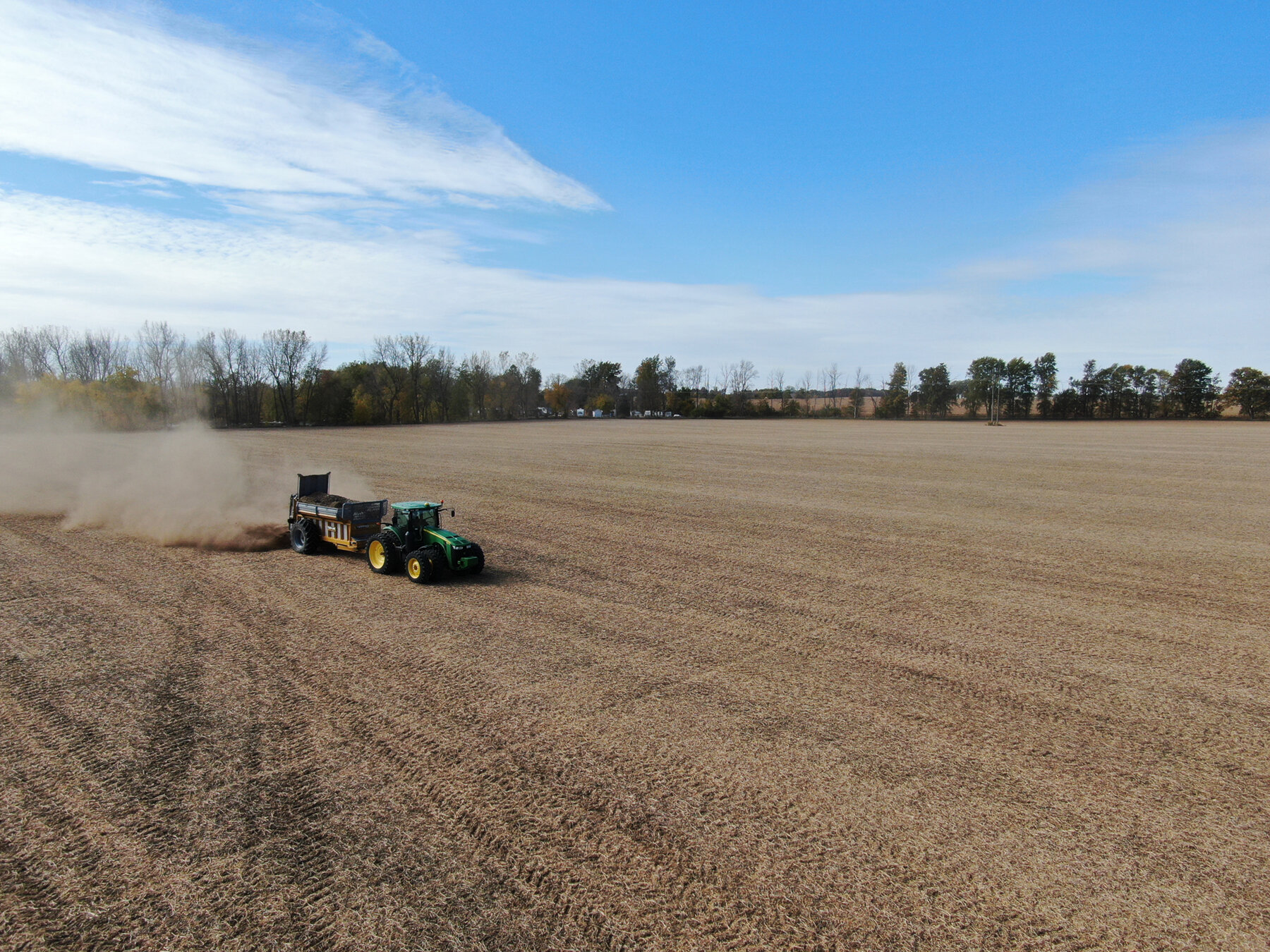

Custom Spreading
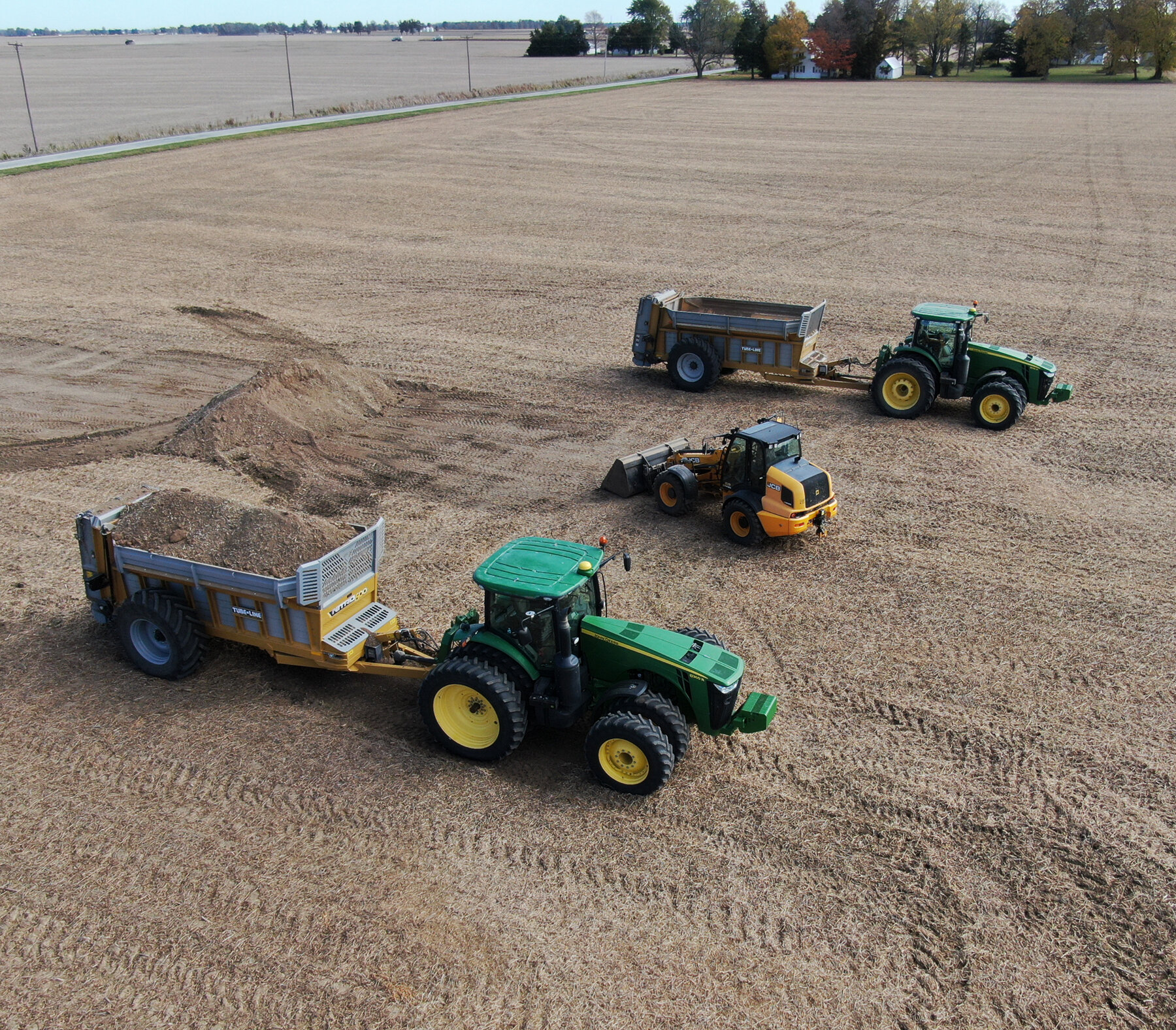
Custom Spreading
Cross Creek Ag Solutions believes in high principles of soil health, microbial health, and overall plant health nutrition for your operation. We have over six years of experience in commercially spreading chicken litter. Here are some of the features of this application.
Benefits of Using Chicken (Poultry) Litter as a Fertilizer for Crop Production
Poultry litter is a proven, nutrient-dense fertilizer that can play a key role in improving soil performance and maximizing crop yields in row-crop and forage systems.
1. High-Value Nutrient Source
Chicken litter delivers a strong balance of nitrogen (N), phosphorus (P), and potassium (K) needed for crop production. It also provides essential secondary nutrients and micronutrients that help support plant health throughout the growing season—often reducing the need for supplemental inputs.
2. Supports Consistent Yield Performance
With proper application rates and timing, poultry litter can drive strong yield results across crops such as corn, soybeans, wheat, and hay. Its nutrient profile supports early growth, root development, and overall plant vigor.
3. Improves Soil Structure and Workability
The organic matter in poultry litter helps:
Improve soil tilth and aggregation
Reduce compaction over time
Increase water infiltration and retention
Enhance field trafficability in varying conditions
Healthier soil leads directly to more consistent crop performance.
4. Slow-Release Nitrogen for Season-Long Feeding
A portion of the nitrogen in poultry litter is organic, meaning it breaks down gradually. This provides a steady nutrient supply throughout the growing season and helps reduce nitrogen losses compared to highly soluble fertilizers.
5. Reduces Input Costs
For many operations, poultry litter offers a cost-effective alternative to commercial fertilizers. When sourced locally and applied efficiently, it can significantly lower overall fertility costs while delivering comparable or improved productivity.
6. Builds Long-Term Soil Fertility
Repeated applications can increase soil organic matter and improve nutrient-holding capacity (CEC). Over time, this builds more resilient, productive soils that require fewer corrective inputs.
7. Promotes Sustainable Nutrient Management
Using poultry litter recycles nutrients back into the land, supporting responsible nutrient management plans. When applied according to soil tests and best management practices, it can reduce reliance on synthetic fertilizers and support long-term farm sustainability.
Credentials
Licensed CAT:14 and fertilizer application F275388
Fertilizer application Business license: 275254